Because gratitude and difficult emotions can exist at the same time.
Pregnancy is often described as one of the most beautiful and exciting experiences in a person's life. From the moment a pregnancy is announced, conversations tend to center around baby names, nursery decorations, tiny clothes, and the anticipation of meeting a new baby.
People may tell you how lucky you are, how beautiful pregnancy is, or how much you should enjoy every moment.
And maybe you are excited. Maybe you've dreamed about this pregnancy for years. Maybe you feel an overwhelming sense of love and gratitude for the life growing inside you.
But what happens when you're also struggling?
What happens when the morning sickness feels unbearable, your body no longer feels familiar, your anxiety keeps you awake at night, or the emotional changes leave you feeling like someone you barely recognize?
What happens when you're grateful to be pregnant but don't particularly enjoy being pregnant?
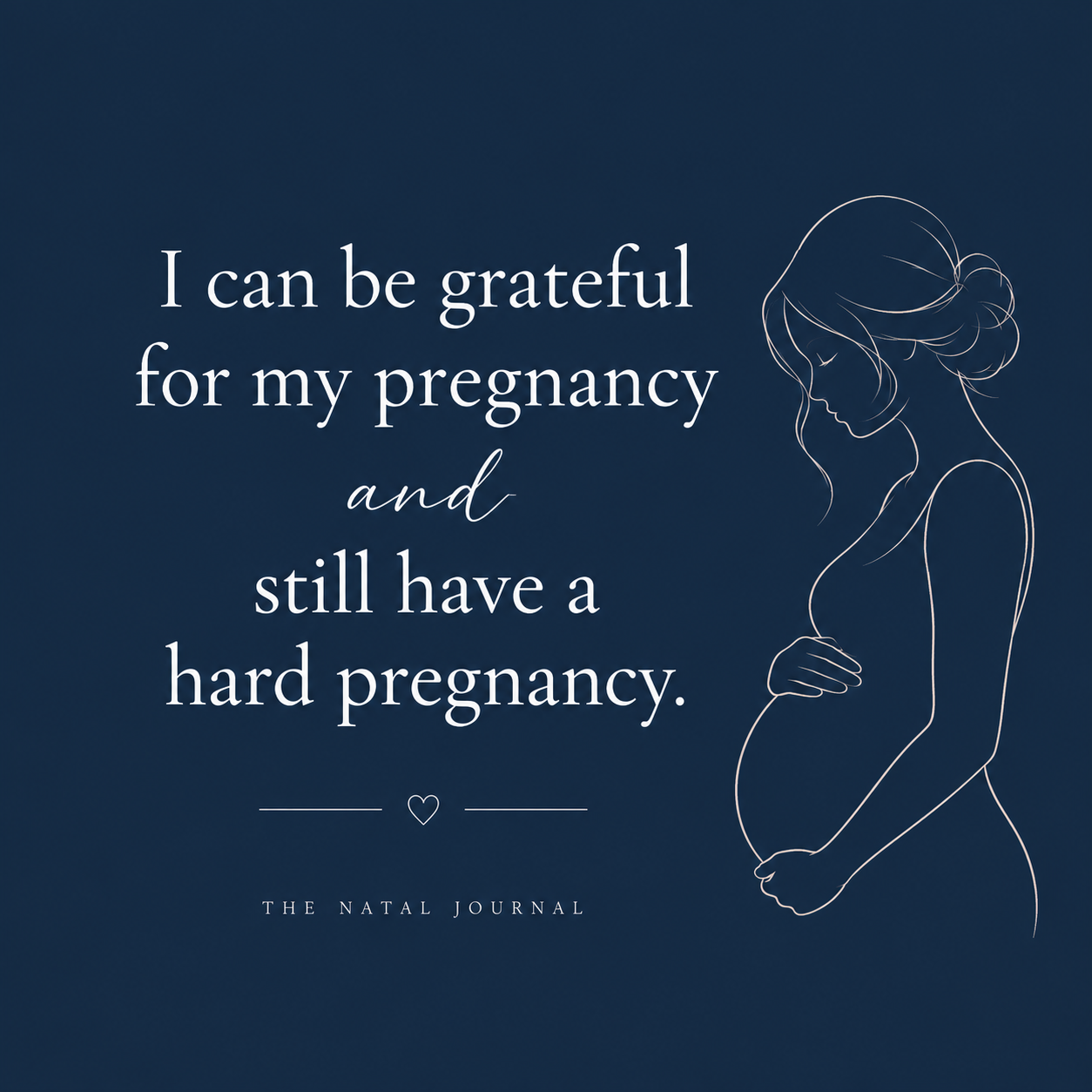
The truth is that you can be grateful for your pregnancy and still struggle with the experience of being pregnant.
Those two realities do not cancel each other out.

The Pressure to Be Happy During Pregnancy
Pregnancy is frequently surrounded by expectations of happiness, excitement, and gratitude.
From social media pregnancy announcements to maternity photoshoots and baby showers, the experiences most publicly celebrated tend to be the joyful ones.
There is nothing wrong with celebrating pregnancy. For many people, these moments are deeply meaningful.
However, when happiness becomes the only emotion that seems acceptable, people who are struggling may begin to feel isolated.
You might find yourself thinking:
"I wanted this pregnancy, so why am I having such a hard time?"
"Other people would do anything to be in my position."
"I should be enjoying this more."
"What if I'm already failing as a mother?"
"Why does everyone else seem so happy while I feel overwhelmed?"
These thoughts can create an additional layer of guilt on top of whatever challenges you're already experiencing.
Instead of simply acknowledging that pregnancy is difficult, you may begin judging yourself for finding it difficult.
But gratitude is not a requirement to feel happy all the time.
Being thankful for your pregnancy does not mean you have to enjoy every symptom, every physical change, or every emotional experience that comes with it.
You are allowed to acknowledge the difficult parts without feeling as though you're diminishing the meaningful ones.
Two Things Can Be True at the Same Time
One of the most important things to understand about emotional well-being during pregnancy is that seemingly contradictory feelings can coexist.
You can feel excited about meeting your baby while feeling terrified about childbirth.
You can love your growing belly while struggling with changes in your body image.
You can appreciate the opportunity to become a parent while grieving aspects of your previous life.
You can be thankful for your pregnancy while feeling physically exhausted, emotionally overwhelmed, or mentally disconnected.
These experiences are not necessarily contradictions. They reflect the complexity of being human.
In psychology, the ability to acknowledge more than one emotional reality is sometimes discussed through the concept of dialectical thinking—recognizing that two experiences that appear to oppose one another can both contain truth.
During pregnancy, this might sound like:
"I am grateful to be pregnant, and I am having a difficult time."
Notice the difference between using "and" instead of "but."
When you say, "I'm grateful to be pregnant, but I'm struggling," it may feel as though your struggle needs to be justified.
When you say, "I'm grateful to be pregnant, and I'm struggling," you create room for both experiences.
Neither one has to erase the other.
Why Pregnancy Can Be Emotionally Difficult
Pregnancy involves significant physical, psychological, and social changes.
While every pregnancy is different, several factors can contribute to emotional distress during this period.
Physical Discomfort and Exhaustion
Nausea, vomiting, fatigue, sleep disturbances, pain, and other pregnancy-related symptoms can affect daily functioning and emotional well-being.
When you're physically uncomfortable for extended periods, it may become more difficult to manage stress, maintain routines, or participate in activities that previously brought you joy.
For some people, pregnancy symptoms can become severe enough to interfere with work, relationships, and everyday responsibilities.
Feeling frustrated by these experiences does not mean you are ungrateful.
It means you're responding to something that is genuinely difficult.
Hormonal and Emotional Changes
Pregnancy involves substantial hormonal and physiological changes that may influence sleep, energy, and emotional experiences.
However, it is important not to attribute every emotional concern to hormones alone.
Persistent sadness, excessive worry, or significant changes in functioning deserve attention rather than dismissal.
Changes in Identity
Pregnancy may also introduce questions about identity, independence, relationships, and the future.
You may begin wondering how your life will change after the baby arrives.
Will you recognize yourself?
Will your relationships change?
Will you still have time for the things that matter to you?
These questions can bring excitement and uncertainty simultaneously.
Fear and Uncertainty
Even when a pregnancy is progressing without known complications, uncertainty can be emotionally challenging.
Some people worry about pregnancy loss, fetal development, childbirth, parenting, finances, or their ability to care for a newborn.
For individuals who have experienced infertility, pregnancy loss, trauma, or previous mental health challenges, these concerns may feel especially intense.
You do not need to experience a medical complication for your emotional concerns to deserve support.
When Gratitude Turns Into Guilt
Gratitude can be meaningful. It may help people recognize what they value and appreciate important aspects of their lives.
But gratitude becomes less helpful when it is used to dismiss difficult emotions.
You may hear statements such as:
"At least you're pregnant."
"Other women would love to be in your position."
"You should be enjoying this."
"Just wait until the baby gets here."
Sometimes these comments come from people who genuinely want to offer reassurance.
However, they can unintentionally communicate that struggling during pregnancy is inappropriate or something to feel ashamed of.
This can be particularly painful for someone who experienced infertility or pregnancy loss before becoming pregnant.
You may feel pressure to be especially grateful because of everything it took to reach this point.
But a long-awaited pregnancy can still be physically and emotionally challenging.
You do not have to prove your gratitude by remaining silent about your struggles.
Gratitude should not require you to ignore your needs, minimize your symptoms, or pretend that everything is fine.

Struggling During Pregnancy Does Not Mean You Will Be a Bad Mother
For some people, difficult emotions during pregnancy can lead to concerns about their ability to become a good parent.
You might wonder whether feeling disconnected from pregnancy means you won't bond with your baby.
You might worry that anxiety or sadness reflects something about your capacity to love your child.
You might even feel guilty for wishing pregnancy would move faster so you could finally feel physically comfortable again.
These worries can be distressing, especially when pregnancy is presented as a time when you should already feel an intense emotional connection to your baby.
However, your emotional experience during pregnancy does not determine your worth or ability as a parent.
Bonding experiences vary. Some people feel connected to their babies early in pregnancy, while others develop that connection gradually during pregnancy or after birth.
There is no single emotional timeline that every parent must follow.
If you're experiencing persistent emotional distress or difficulty feeling connected, you deserve compassionate support rather than judgment.
How to Make Room for Gratitude and Difficult Emotions
You do not need to force yourself into constant positivity to appreciate your pregnancy.
Instead, consider creating space for a more balanced emotional experience.
1. Practice Naming Your Emotions Without Judging Them
Rather than immediately trying to change how you feel, begin by identifying the emotion.
You might say:
"Today, I feel overwhelmed."
"I'm excited about my baby, but I'm scared about childbirth."
"I'm grateful for this pregnancy, and I'm exhausted."
Naming emotions can help you recognize what you're experiencing without automatically treating those feelings as something wrong.
2. Replace "I Should" With "I Am"
Statements such as "I should be happier" or "I should be more grateful" can create pressure and self-criticism.
Try replacing them with observations.
Instead of:
"I should be enjoying this."
Consider:
"I'm having a difficult day, and I may need additional support."
This shift allows you to acknowledge your present experience rather than measuring it against an expectation.
3. Allow Yourself to Ask for Help
Pregnancy can bring changing physical and emotional needs.
You may need additional rest, help with household responsibilities, reassurance from your healthcare team, or support from loved ones.
Asking for assistance does not mean you're incapable.
It means you're recognizing that your needs matter.
4. Set Boundaries Around Unhelpful Comments
You are allowed to communicate when certain comments are not supportive.
For example:
"I know you mean well, but I need space to talk about the difficult parts of pregnancy, too."
Or:
"I'm grateful to be pregnant, but I'd appreciate being able to share how I'm feeling without comparing my experience to someone else's."
You do not owe anyone a detailed explanation of your emotional experience.
5. Consider Professional Mental Health Support
If pregnancy-related stress, anxiety, sadness, or emotional distress becomes persistent, overwhelming, or begins interfering with daily life, consider speaking with a qualified healthcare or mental health professional.
You do not have to wait until your symptoms become severe to ask for help.
Support may include mental health screening, counseling, practical assistance, or other services based on your individual needs.

When Pregnancy Struggles May Be More Than Everyday Stress
Experiencing a range of emotions during pregnancy is common.
However, some symptoms may indicate that additional mental health support would be beneficial.
Consider reaching out to a healthcare professional if you notice:
Persistent sadness, hopelessness, or frequent crying.
Excessive worry that feels difficult to control.
Loss of interest in activities you previously enjoyed.
Significant difficulty concentrating or completing daily responsibilities.
Persistent feelings of guilt, worthlessness, or inadequacy.
Changes in sleep or appetite that cause concern beyond expected pregnancy changes.
Panic attacks or distressing thoughts that interfere with daily functioning.
Feeling emotionally overwhelmed most days.
These experiences do not automatically mean you have a mental health condition, but they deserve attention.
Depression and anxiety can occur during pregnancy, not only after childbirth.
A qualified healthcare professional can help assess your symptoms and discuss appropriate support options.
If you experience thoughts of harming yourself or feel unable to remain safe, seek immediate assistance through emergency services or a crisis support resource.
In the United States, you can call or text 988 to reach the Suicide & Crisis Lifeline.
A Gentle Reminder for the Difficult Days
Some days, pregnancy may feel exciting and meaningful.
Other days, you may feel uncomfortable, exhausted, frightened, disconnected, or overwhelmed.
And sometimes, you may experience all of those emotions within the same day.
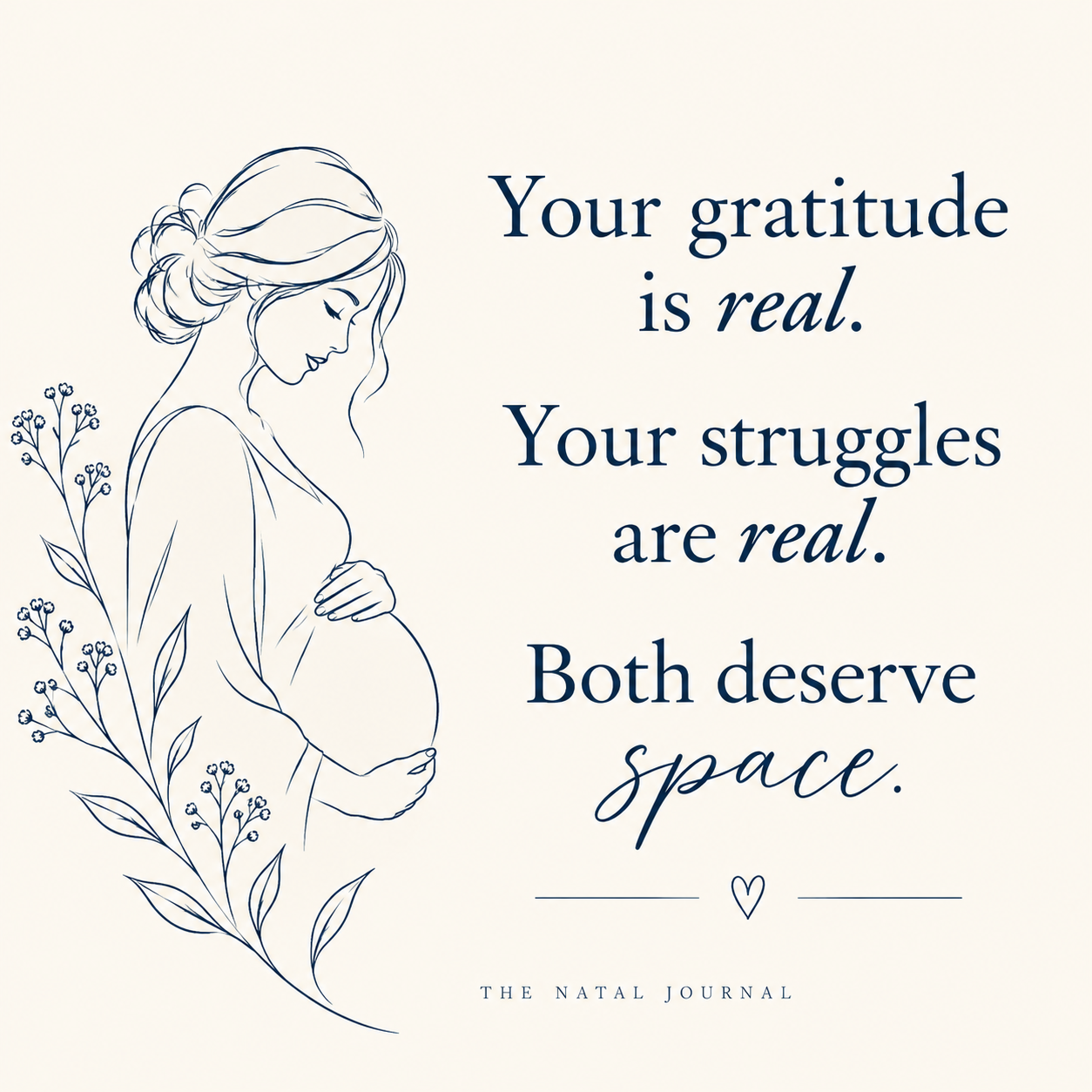
You do not have to choose between acknowledging the beauty of pregnancy and recognizing its challenges.
You do not have to minimize your symptoms because someone else wishes they were pregnant.
You do not have to hide your anxiety because your pregnancy was planned.
You do not have to pretend that everything is wonderful simply because you're grateful for your baby.
You are allowed to experience pregnancy as it actually feels—not only as you imagined it would feel.
Reflection: Checking In With Yourself
If you've been feeling conflicted about your pregnancy, consider taking a few moments to reflect on the following questions.
What emotions have been coming up most often during my pregnancy?
Have I been giving myself permission to acknowledge difficult feelings?
Are there expectations about pregnancy that have made me feel guilty or inadequate?
What parts of pregnancy have been especially challenging for me?
What kinds of emotional or practical support would help me right now?
How can I show myself compassion without feeling pressured to be positive?
You do not need to answer every question at once.
These prompts are simply an opportunity to pause and acknowledge your experience.
If reflecting on difficult experiences increases your distress, consider setting the exercise aside and seeking support from someone you trust or a qualified professional.
Final Thoughts: Gratitude and Struggle Can Coexist
Pregnancy is not a single emotion.
It is an experience that can involve physical changes, emotional adjustments, uncertainty, anticipation, and moments of both joy and difficulty.
Being grateful for your pregnancy does not mean you have to enjoy every part of it.
Struggling does not mean you are undeserving of your pregnancy.
And asking for help does not make you any less capable of becoming a loving, supportive parent.
At The Natal Journal, we believe that mothers deserve space to talk about the full experience of pregnancy—not only the moments that are easy to celebrate.
So if you need a reminder today, let it be this:
You can be grateful for your pregnancy and still struggle.
Both experiences are valid. Both deserve acknowledgment. And you deserve support through all of it.
Continue the Conversation
Have you ever felt pressure to enjoy every moment of pregnancy, even when you were struggling?
The Natal Journal welcomes thoughtful conversations about the emotional realities of pregnancy and motherhood.
If this article resonated with you, consider sharing it with someone who may benefit from knowing they aren't alone in having complicated feelings about pregnancy.
You can also explore additional articles in our Pregnancy section for more education and resources related to prenatal mental health.
Disclaimer: This article is intended for general educational and informational purposes only. It does not constitute medical advice, mental health diagnosis, psychotherapy, or individualized treatment. If you have concerns about your mental health during pregnancy, consult a qualified healthcare professional. Reading this article does not establish a therapist-client relationship.
